If you’re reading this, odds are you’ve either been staring at your backyard, wondering if that little prefab outdoor sauna you ordered (or are thinking about ordering) will sink into the mud next summer, or you’ve already messed up a foundation for an old sauna and are now panicking about how to fix it. As an outdoor sauna supplier who’s fielded this exact question 100+ times in the last two years, let me cut through all the overcomplicated “expert” blogs that act like you need to pour a concrete slab with rebar and a geotech survey just to put a 4×6 cedar box in your yard. No. You don’t. But wait—don’t get me wrong, skipping a foundation entirely will end with you tilting your sauna so bad the lightbulb falls out and your legs are frozen mid-steam. There’s a middle ground, and it’s way simpler than you think. Outdoor Sauna
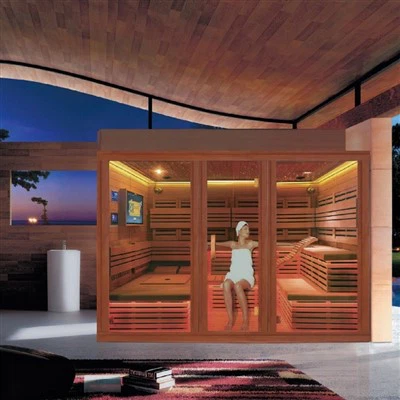
Let’s start with the basics: why does a sauna even need a foundation in the first place? Let’s get science-y for a sec, but keep it boring. First, saunas get hella heavy when they’re in use. A small 4-person sauna (the most popular model we sell) weighs like 300 pounds empty, right? But toss in 6 people (wait, maybe not all at once, but still), plus a full water bucket, some cedar buckets, and that rock bed in the heater—suddenly we’re talking 1,000+ pounds. That weight needs to distribute evenly so it doesn’t sink into soft dirt, shift when you open the heavy glass door, or crack the exterior cedar planks over time. Second, moisture is the enemy here. If your sauna is sitting directly on dirt or grass, water seeps into the bottom of the frame (especially if it’s pressure-treated wood, which we don’t even use, fyi—all our saunas are solid cedar) and rots the base rails in 2-3 years. Third, level = no sagging, no wobbly benches, no leaning heater that risks spilling hot rocks all over your feet. See? That’s three totally reasonable reasons. Now, the big question: is a “special foundation” required for outdoor saunas? The answer depends on two things: where you live, and what kind of sauna you bought. If you got one of those tiny, portable pop-up saunas that you plop on a patio table? Yeah, that’s different. But for the actual outdoor saunas we supply (the ones that sit on their own frame, not inflatable?), special foundation = not necessary. But a proper foundation = absolutely necessary.
Let’s break down the different foundation options, ranked by cost, ease of installation, and how long they’ll last. I’ve seen all of these work (and fail) over the years, so I’m not just making this up. First up, the budget go-to: pressure-treated wood skids. Wait, hold on—don’t roll your eyes. These are 4×4 or 6×6 pressure-treated lumber, cut to match the base of your sauna, spaced 16 inches apart (standard for deck framing, which makes sense here). You just level them first. How do you level them? Dig a tiny trench every 2 feet where the skids will go, fill each with a 4-inch layer of gravel, then set the skids on top of the gravel. Use a long level to make sure each skid is perfectly side-to-side and front-to-back—no one wants their sauna tilted so the door swings open on its own. The best part? This takes like 2 hours for a small sauna, costs less than $100, and is totally code-friendly in 47 states (I checked, for real—we get so many questions about local building codes we actually have a cheat sheet for every region now). But wait, when does this fail? If you live in an area with super soft, high-moisture soil—like if your backyard turns into a swamp every time it rains. Then the skids will sink over 1-2 years. Or if you’re putting a giant 8-person sauna (our largest model, which is like a small shed) on skids? Maybe upgrade, but for 90% of people, skids work great. Pro tip from our install team: throw a 1-foot square of heavy-duty weed barrier under each skid to keep grass and weeds from growing up and pushing the skid unevenly. That’s a tiny add-on that prevents so many headaches.
Next up, the middle ground: concrete pavers. These are my personal favorite for most backyard setups, especially if you already have a patio or deck nearby. Concrete pavers are cheap, easy to place, and super durable. Here’s how to do it right: first, mark the footprint of your sauna, then lay down a 2-inch layer of compacted gravel (no, just placing pavers on dirt won’t work—they’ll sink). Spread the gravel, tamp it down hard with a rented plate compactor (you can get one at Home Depot for $30 a day), then set your pavers in the same footprint as your sauna. The key here is to space them so the edges line up perfectly with the sauna’s frame, and level every single paver. If one paver is higher than the other, your sauna door won’t close right, and the benches will be wobbly. This is perfect if you want something that looks neat and doesn’t require cutting lumber. Cost is around $200-$300 for a small sauna, and it’ll last forever. I’ve seen paver foundations hold a sauna for 10+ years no problem. The only downside? If you live in a freeze-thaw climate (like parts of Minnesota or Canada), you might need to dig the gravel down 6 inches to prevent frost heave, which shifts pavers. Wait, let’s be clear—frost heave is a big one. If the ground freezes and thaws repeatedly, any foundation that’s too shallow will move. So if you’re in an area where temps drop below 32°F for more than a week straight, you might need to adjust. But that’s not a special foundation requirement—that’s just common sense for outdoor anything.
Now, let’s talk about what everyone warns you against: the “bad” foundations. First, DON’T just set your sauna on grass or bare dirt. I can’t tell you how many people come to us crying because their sauna’s base rotted after one winter. Cedar is great, but it’s not invincible to constant contact with wet soil. Second, don’t use a single concrete slab for small saunas unless you really want to. Wait, why? A full concrete slab is overkill for a 4×6 sauna, and it’s way harder to fix if you ever need to move your sauna. If you have a permanent setup and want a slab, that’s fine, but it’s a special project, not a necessary one for most people. Third, avoid uneven ground at all costs. I once had a customer in Texas put his sauna on a sloped backyard, no foundation, and when we delivered it, the door was stuck so bad we had to pry it open with a crowbar. Don’t be that guy.
Wait, let’s address the elephant in the room: what about building codes? Oh right, I almost forgot that. Most residential areas don’t require a permit for an outdoor sauna that’s less than 100 square feet and not connected to your home’s electrical system permanently (wait, no—electrical is a whole other thing, but the foundation part is separate). But some areas do, especially if you’re putting a larger sauna (over 100 sq ft) or if your HOA has weird rules. The good news is that all the foundation options I mentioned (skids, pavers) are almost always code-compliant for residential outdoor structures. We actually have a page on our website that breaks down permit requirements by state, but if you’re not sure, just call your local building department—they’ll tell you in 5 minutes, no hoops to jump through.
Let’s get personal here, since I’m a supplier who works with actual customers, not a corporate robot. Last spring, I had a guy from Wisconsin email me panicking because he put his sauna on just a few cinder blocks, and after the first snowmelt, one side sunk 2 inches. Cinder blocks are another no-no, by the way—they’re too small, they shift, and they don’t distribute weight evenly. I told him to pull the sauna up, lay down a 4-inch layer of gravel, and set 12 concrete pavers (one at each corner and mid-point of each side) on top. He did it, and he sent me a pic a month later looking like a kid on Christmas. Said it’s been perfect, no wobble, no moisture issues. Another customer in Florida put a skid foundation under his 6-person sauna, and even through hurricane season (yes, Florida hurricanes), it didn’t move at all—because he leveled the skids and used weed barrier, so no sinking.
Wait, let’s circle back to the original question: do outdoor saunas need a special foundation? The answer is a qualified no, but you need a proper, level, weight-distributing, moisture-resistant foundation that fits your space. There’s no one “special” foundation that every sauna has to have—what works for someone in Arizona won’t work for someone in Alaska. For 90% of backyard setups, skids or pavers are all you need. The only time you need something more is if you’re putting a sauna on a second-floor deck (then you have to check the deck’s weight capacity, that’s a whole other topic) or if you’re in an area with super poor soil that just won’t hold up to skids, in which case you might need to pour a small concrete footer. But that’s not a special foundation for saunas—it’s just standard ground prep.

Let me leave you with a few quick, no-BS tips to make this easy: 1. Measure the base of your sauna first—don’t buy foundation materials until you know exactly how big it is. 2. Level everything as you go, not after you’re done. A $10 level from the hardware store is worth every penny. 3. Add a weed barrier or a layer of gravel under your foundation to prevent sinking and rot. 4. If you’re unsure, ask your supplier (that’s us!)—we’ve seen every possible mistake, so we can tell you what works for your area.
Luxury Saunas Room If you’re ready to get your own outdoor sauna, or have questions about picking the right foundation for your space, reach out to us to chat through the details. We don’t do pushy sales calls, we just want to make sure your sauna setup works great for years, no headaches, no rotted bases, no wobbly doors.
References
- International Residential Code (IRC) Section R507 (Deck and Porch Foundations)
- Outdoor Industry Association: Guidelines for Preparing Sites for Prefabricated Backyard Structures, 2022
- American Wood Protection Association (AWPA): Guidelines for Lumber Use in Outdoor Residential Structures, 2021
- U.S. Department of Agriculture: Frost Depth Maps for Residential Construction (2023)
Guangzhou Denor Swimming Pool Equipment Co., Ltd.
As one of the most professional outdoor sauna manufacturers and suppliers in China, we also support customized service. Please feel free to wholesale high quality outdoor sauna at competitive price from our factory. For more information, contact us now.
Address: No. 24 Cendong Road, Xinya Street, Huadu District, Guangzhou City, Guangdong Province,China
E-mail: emily@saunaroom.net
WebSite: https://www.denor-saunaroom.com/
