Hey everyone, it’s Jake here from the sheet metal parts shop, and today I’m breaking down something that I get asked about all the time—why some sheet metal projects go smoothly, and others hit snags before we even hit the press brake. If you’re a buyer or someone who works with custom metal parts, you’ve probably wondered why a design that looked simple on paper ends up being way harder to form than it should be. That’s all about formability, right? The measure of how easily sheet metal can be shaped into a specific part without cracking, wrinkling, or tearing. After 8 years of running our shop and working with everything from thin aluminum enclosures for electronics to thick steel brackets for construction, I’ve seen firsthand that formability isn’t just one thing—it’s a mix of material, design, process, and even little details that most people don’t think about. Let’s dive in, keep it real, no super jargon that makes you zone out. Sheet Metal Parts
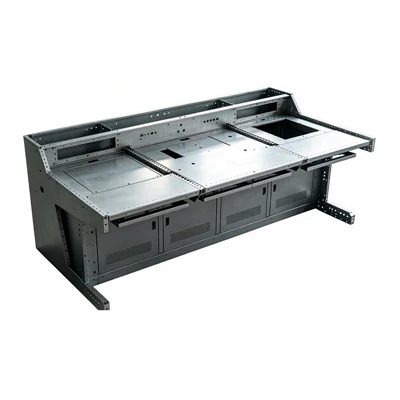
First up, the material itself—this is the big one, and I can’t stress it enough. You can have the perfect design and the fanciest press brake, but if you pick the wrong metal, you’re gonna have a bad time. Not all sheet metal is the same, even when it looks like it. For example, aluminum is super popular for lightweight parts, but 6061 aluminum is way less formable than 5052. I’ve had clients come in with a design for a curved aluminum bracket and say “just use the cheapest aluminum you can find” only to realize that cheap 6061 would crack at the bend radius. We had to switch them to 5052, which is softer and stretches way better, and that fixed the issue right away. Then there’s steel—mild steel (A36 or 1018) is way more formable than high-strength steel (HSS) or ultra-high-strength steel (UHSS), which are used for car parts but are almost impossible to bend without special equipment. Copper is another one; it’s super ductile, but certain alloys work-harden really fast when you bend them, so you have to anneal them (heat them up to soften) mid-process. Even the thickness of the material matters—thinner sheet is way easier to form into complex shapes, but if you’re making a structural bracket that needs to hold weight, you can’t go too thin. I always tell clients: don’t skimp on material specs just to save a few bucks. That’s the quickest way to delay a project and pay more in the long run.
Next, design factors—this is where a lot of engineers miss the mark, and it drives me nuts (in a friendly way, of course). The way you dimension your part, the bend radii, the flanges—all of this impacts formability more than most people realize. Let’s start with bend radii, because that’s the #1 design mistake I see. If you have a bend, the radius of that bend (called the inner bend radius) can’t be too small relative to the material thickness. The general rule of thumb is that for most materials, the inner bend radius should be at least equal to the material thickness. Wait, hold up—let me explain that. If your sheet is 1mm thick, your inner bend radius can’t be less than 1mm, otherwise the metal will stretch too much on the outside of the bend and crack. I’ve had clients send me designs with a 0.5mm inner bend radius on 1mm aluminum, and they’re shocked when we tell them we can’t do it without cracking. Sometimes you can pull it off with special tooling, but that adds cost and time, which no one wants. Then there’s notching—when you have multiple bends close together, you have to cut notches in the corners, right? If the notch is too small, the metal will wrinkle at the intersection of the bends. I’ve had a client’s design where two bends met at a corner with a 1mm notch, and when we bent it, the metal puckered like a prune. We had to make the notch 2x the material thickness, and that fixed the wrinkling. Flange length is another big one—if the flange (the flat part sticking out from a bend) is too short, the press brake can’t grip it properly, so you get uneven bends. The minimum flange length we can do is usually 2.5x the material thickness, but sometimes we can get away with less if we use special tooling. Also, don’t forget about holes or slots near bends! If a hole is too close to a bend line, the metal will tear around the hole when you bend it. I’ve seen designs where a 5mm hole is 3mm away from a bend line on 1mm steel—total no-no. We tell clients to keep holes at least 3x the material thickness away from bend lines, or they’ll need to add a dimple or a slot to distribute the stress.
Now, process-related factors—this is where our shop’s expertise comes into play, because the way we form the part can make or break formability, even if the material and design are right. First up is tooling. The punches and dies we use on the press brake aren’t one-size-fits-all. If you use the wrong die opening for a material, you’ll get uneven bends. The die opening (the V-shape in the die that the sheet sits in) should be at least 6x the material thickness. So for 1mm sheet, we use a 6mm die opening. If we use a 4mm die opening on 1mm aluminum, the bend will be too tight, and the metal will crack. Also, the punch tip radius—if it’s too small, it will put too much stress on the inner bend, leading to cracking. We keep a whole set of punches and dies for different materials and thicknesses, because cutting corners on tooling is just bad business. Then there’s the forming sequence. If you have a part with multiple bends, the order you bend them matters a lot. For example, if you bend a long flange first, then a smaller bend near the end, the smaller bend will distort the long flange. We always plan the bending sequence so that the most critical bends are done first, or that less stress is applied to areas that have already been formed. I once had a part with 5 bends, and the client’s original sequence caused a twist in the part. We rearranged the order of the bends, and the twist was gone—no extra cost, just better planning. Lubrication is another process step that’s often overlooked. When you’re drawing sheet metal (pulling it into a complex shape, like a box or a enclosure), lubricant reduces friction between the metal and the tooling, so it doesn’t tear or scratch. We use different lubricants for different materials—light oil for aluminum, heavier grease for steel, and even dry lubricants for sensitive parts that can’t have oil residue. If we skip lubrication on a deep draw, the part will tear halfway through the process, and we waste material.
Wait, also—annealing and heat treatment, that’s a big one for certain materials. Like I mentioned earlier, high-strength steel is super hard to bend without cracking, so sometimes we have to anneal the area where the bend will happen before forming. Annealing heats the metal to a specific temperature, which softens it, so it can stretch without breaking. We do this for clients who have parts with complex bends in HSS, because it saves them from having to redesign the part or use a more expensive material. On the flip side, work hardening—when metal gets harder as you bend it repeatedly. If you’re making a part with multiple bends, every bend makes the metal a little harder, so the last bend might be harder to form. So sometimes we have to anneal the part mid-way through the process to keep it formable. That’s another thing that engineers don’t always account for in their designs, and it’s our job as suppliers to catch that.
I also want to talk about surface conditions, because that’s something I didn’t expect to matter early on. If your sheet metal has scratches, dents, or uneven thickness from the supplier, that will kill formability. A scratch on the surface is a stress riser—when you bend the metal, the scratch will pull apart and turn into a crack. I once had a client send us a batch of aluminum that had a few light scratches on the surface, and when we bent it, every part cracked along the scratch line. We had to reject the batch and have the supplier send a new one, which delayed the project, but it would have been way worse if we had tried to use the scratched metal. Also, rust on steel sheets is a problem because it makes the metal brittle, so it cracks when you bend it. We always inspect every batch of material when it comes in, because bad material from the supplier is not our fault, but we have to catch it before it goes into the press.
Oh, and one more thing—testing and prototyping. This is something I push all my clients to do, because it’s way cheaper to fix a design in prototype than in full production. I’ve had clients come to me with a design that works on paper, but when we make a prototype, it doesn’t form right, and we have to adjust the bend radii or the notch sizes. Sometimes it’s a tiny change, like making a bend radius 0.5mm larger, that makes all the difference. Prototyping lets us work out all the formability kinks before we order 1000 parts, which saves everyone time and money. I had a client last year who tried to skip prototyping because they wanted to cut costs, and when we ran the first 50 parts, 30% of them had cracking issues. We had to rework the design, make new tooling, and they ended up spending more than if they had just done a prototype upfront. It’s a no-brainer for me.
Wait, let me make sure I’m not missing anything. What about environmental factors? Like temperature? Oh right! If you’re forming sheet metal in a cold shop, especially in winter, some metals get more brittle. I’ve noticed that aluminum gets a little more prone to cracking in temperatures below 50°F, because the ductility drops slightly. So in the winter, we keep our shop at a consistent temperature, and we even warm up some batches of material before forming if they’ve been sitting in the cold warehouse overnight. That’s a small step, but it makes a big difference in formability.
At the end of the day, formability is a balance between material choice, design details, process planning, and even the small stuff like material condition and temperature. As a sheet metal supplier, our job isn’t just to bend metal—we’re problem solvers. If you come to me with a design that’s having formability issues, I won’t just say “we can’t do that.” I’ll work with you to adjust the bend radii, switch to a more formable alloy, adjust the tooling, or plan a different forming sequence to get the part you need. I’ve been doing this long enough to know that most formability issues aren’t impossible to fix—they just need a little tweak, not a full redesign.
If you’re working on a sheet metal project and you’re not sure if your design will form right, or you’re having issues with parts that aren’t turning out as expected, hit us up. We can walk through your design, offer suggestions, and even do a prototype to test formability before you go into full production. No pressure, just honest advice from someone who’s been in the shop floor for years, not some textbook that doesn’t get how real projects work.
Sheet Metal Cabinet References:
- ASM International. (2004). Formability of Metals. ASM Handbook, Volume 14: Metalworking: Sheet Forming.
- Groover, M. P. (2019). Fundamentals of Modern Manufacturing: Materials, Processes, and Systems (7th ed.). John Wiley & Sons.
- Kalpakjian, S., & Schmid, S. R. (2019). Manufacturing Processes for Engineering Materials (7th ed.). Pearson.
- British Standards Institution. (2015). BS EN 10051: Continuously hot-rolled steel sheet and strip – Technical delivery conditions.
Hefei Excellent Intelligent Technology Co., Ltd.
As one of the most professional sheet metal parts manufacturers in China, we’re featured by quality products and good service. Please rest assured to wholesale bulk customized sheet metal parts made in China here from our factory. Also, pricelist is available.
Address: No. 3 Jingyi Road, Douzhen Industrial Park, Gangji Town, Changfeng County, Hefei City, Anhui Province
E-mail: 1637201948@qq.com
WebSite: https://www.cnakst.com/
