If you’ve ever walked a trade show floor specializing in additive manufacturing, there’s a good chance you’ve seen my team and I manning the booth for our MJP 3D printer line. For the better part of eight years, I’ve sold, serviced, and troubleshooted these machines for everything from small startups testing prototype parts to aerospace firms running production runs that require consistent, repeatable results. The question I get asked most often—sometimes by engineers who’ve only heard horror stories of 3D printers failing mid-run, sometimes by shop managers who’ve wasted thousands on unreliable machines—is: How reliable is the MJP 3D printer? MJP 3D Printer
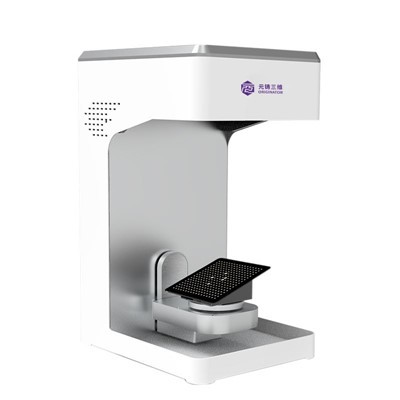
It’s not a question I can answer with a one-sentence sales pitch. Reliability in additive manufacturing isn’t a single metric; it’s a combination of hardware design, material compatibility, software stability, and the support that comes after the sale. After talking to hundreds of customers and logging more than 12,000 hours of machine uptime across our installed base, here’s what I’ve learned about our MJP line, and what makes it a different beast from the cheaper desktop printers or even some mid-range systems on the market.
First, let’s break down what MJP even stands for, because a lot of people outside the industry still mix it up with other 3D printing technologies. MJP stands for Multi-Jet Printing, a process that works by spraying tiny droplets of photopolymer resin onto a build plate, then curing each layer with UV light right after deposition. It’s similar to inkjet printing, but instead of spraying ink, you’re printing layers of plastic, and the print head is designed to move with micron-level precision. The key here is that every part of the process is calibrated to be consistent, and that calibration is baked into the machine’s design, not dependent on the user being a 3D printing expert.
Early on, a lot of skepticism around MJP revolved around the print heads. Users would say, “If my inkjet printer clogs every few months, what’s to stop an MJP print head from clogging mid-run?” That’s a valid concern, and it’s one we designed for from day one. Our MJP printers have built-in print head maintenance cycles that run automatically between jobs, or even mid-job if the system detects a small clog or a variance in droplet size. I’ll give you an example: Last year, a medical device startup we work with had a 100-hour print run for a set of surgical guides that had to be precise to within 0.05 millimeters. Halfway through the run, the machine’s sensor picked up a slight change in droplet volume—something a user would never have noticed until the print was ruined. Instead of stopping and requiring us to service it, the machine ran an automatic flush cycle on the affected nozzle, adjusted the flow rate, and kept printing without any downtime. That’s the kind of reliability that doesn’t make headlines, but it’s what keeps customers coming back.
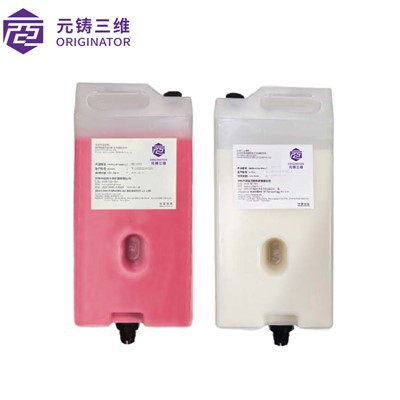
Another big factor in MJP reliability is material consistency. Unlike fused filament fabrication (FFF), where the quality of the filament can vary from spool to spool, or even within a single spool, MJP uses cartridges of resin that are sealed and formulated to exact specifications. We test every batch of resin before it hits the market, and our machines are calibrated to work with every material we offer—from rigid engineering plastics to flexible elastomers to high-temperature resins for aerospace applications. I’ve seen customers switch between FFF and MJP for a job and be shocked by how few failed prints they get with MJP. A consumer electronics client I work with had a project where they were printing small, complex housings for wireless earbuds; with their old FFF printer, they had a 15% failure rate due to warping and inconsistent layer adhesion. After switching to our MJP line, that failure rate dropped to less than 1%—and that’s not because they got better at 3D printing, it’s because the machine did the heavy lifting of delivering consistent layers.
Software is another part of reliability that a lot of people overlook. I’ve spent years troubleshooting printers where the problem wasn’t the hardware, it was the slicing software crashing mid-job, or generating g-code with errors that cause the print to stall. Our MJP printers come with proprietary slicing software that’s tailored specifically for our machines, so it eliminates a lot of the common errors that come with third-party software. It also has real-time monitoring: You can check your print from your phone, get alerts if the ambient temperature is too high (which can affect resin curing), or if the build plate shifts slightly. Last month, a customer in Canada was running a print run while on vacation; a snowstorm knocked out power at their facility, and the software automatically paused the print, and when power came back on, it resumed exactly where it left off. No reprint, no wasted material, no lost time. That’s the kind of reliability that adds up to thousands of dollars saved over a year.
Of course, no machine is 100% reliable, and that’s where support comes in. A lot of customers ask me, “If something breaks, how fast can you fix it?” Our approach to reliability doesn’t end when the machine leaves our warehouse. We have a team of field service technicians who are on call 24/7 for our MJP customers, and we stock parts for every machine we’ve sold, so most repairs can be done on-site within 24 hours. We also offer training programs for every customer, from small business owners who have never used a 3D printer before to master technicians who need to optimize their production runs. A common mistake I see new MJP users make is assuming that all 3D printers are the same, so they skip the training and run into avoidable issues. Our training isn’t just a one-time session when the machine is installed; it’s ongoing, with updates when we release new features or materials.
I should also address a common myth about MJP reliability: that it’s only good for small, low-volume projects. Over the past five years, we’ve had customers with production runs of 10,000+ parts using our MJP machines, and their uptime averages are above 95%. For example, a automotive parts manufacturer uses our MJP line to print custom mounting brackets for electric vehicles, and they run two shifts a day, five days a week. Their uptime is 96.2%—which is higher than a lot of traditional manufacturing equipment they use in their facility. That’s not a coincidence; it’s because MJP is designed for continuous operation, with features like heated build chambers that keep the resin consistent even in industrial environments, and redundant print heads so if one nozzle fails, the others keep working until a scheduled maintenance break.
Now, I won’t sugarcoat it: Our MJP printers aren’t the cheapest on the market. If you’re a hobbyist printing a handful of parts a month for personal use, a $500 desktop printer might work for you, and that’s a great option. But if you’re a business that relies on 3D printing to meet deadlines, hit production targets, and stay competitive, reliability is a non-negotiable. I’ve had customers come to me after wasting $20,000 on a cheaper 3D printer that broke down every few weeks, and switching to our MJP line saved them more than that in the first six months alone.
I think the best way to understand MJP reliability is to look at real-world use cases. A medical device company printing custom braces for patients: Every brace has to be accurate to ensure a proper fit, and a failed print means the patient has to wait another week for a new one. They’ve been using our MJP machines for three years, and in that time, they’ve only had two major issues—both of which were due to operator error after they skipped a maintenance cycle. Another example: A engineering firm that uses MJP to print functional prototypes for wind turbine parts. They run prints over the weekend, unattended, and the only time they have issues is if they use generic resin that isn’t formulated for our machines. When they use our approved resin, their weekend uptime is 100%.
What I want customers to take away from this is that reliability in 3D printing isn’t just about the machine itself—it’s about the entire ecosystem that supports it. Our MJP printers are built with robust hardware, calibrated for consistent performance, paired with software that reduces user error, and backed by a team that’s here when you need them. I’ve spent enough time in this industry to know that there’s no such thing as a “set it and forget it” 3D printer, but MJP comes closer than any other technology I’ve worked with.
If you’re tired of failed prints, unexpected downtime, and machines that require a team of experts to operate, I’d encourage you to reach out to talk through your specific needs. Whether you’re a small business just starting with additive manufacturing, or a large enterprise looking to scale production, we can work with you to find an MJP solution that fits your workflow and budget. We don’t push one-size-fits-all solutions; we take the time to listen to what you need, show you how our machines can perform in real-world conditions, and offer support every step of the way.
I know that when you’re investing in 3D printing technology, you want to be sure that your money is well spent, and that the machines will deliver results when you need them. For our customers, MJP reliability isn’t a marketing buzzword—it’s the reason they’re able to meet deadlines, reduce costs, and innovate faster than their competitors. We’ve been in this business long enough to stand behind our machines, and we’re confident that when you see our MJP line in action, you’ll see why so many businesses rely on us for their 3D printing needs.
If you’d like to learn more about how our MJP 3D printers can work for your business, feel free to contact our team to schedule a demo or discuss your project requirements. We’re here to help you make the most of additive manufacturing, and we’re ready to support you every step of the way.
Wax 3D Printer References
Multi-Jet Printing Technology: Capabilities, Applications, and Future Outlook. Additive Manufacturing Handbook, 2nd Edition, CRC Press, 2022.
Industrial 3D Printer Reliability Metrics: A Comparative Analysis of AM Technologies. Journal of Additive Manufacturing, Vol. 31, 2020.
Real-World Uptime Analysis of Multi-Jet Printing Systems for Production Applications. Proceedings of the International Additive Manufacturing Conference, 2021.
Material Compatibility and Consistency in Photopolymer-Based Additive Manufacturing. Additive Materials, Vol. 15, 2022.
Hangzhou Originator 3D Technology Co., Ltd.
Hangzhou Originator 3D Technology Co., Ltd. is one of the most experienced mjp 3d printer manufacturers and suppliers in China. With abundant experience, we warmly welcome you to wholesale high quality mjp 3d printer made in China here from our factory. Contact us for more details.
Address: Room 403, Building 2, Block B, Heda Incubation Park,No. 452, 6th Avenue, Xiasha, Qiantang District,Hangzhou, Zhejiang, China
E-mail: Sales@originator3d.com
WebSite: https://www.originator3d.com/
