If you’ve ever stood in a remote farming community in the middle of a hot, dry growing season, watching hand pumps sputter and diesel generators guzzle fuel at exorbitant rates, you know how much a reliable water pump isn’t just a convenience—it’s a lifeline. For over a decade, I’ve sourced and supplied water pumps to smallholder farms, municipal water boards, and rural off-grid operations across the U.S. and parts of Central America, and one question comes up more than any other: “Are solar water pumps actually reliable?” Water Pump

It’s a fair question. When diesel costs spike after a single hurricane, or grid power drops for three days during a summer heatwave, a pump that runs on sunlight sounds perfect on paper. But I’ve also seen too many small businesses buy cheap solar pumps from unvetted online sellers, only to have them die after a year of dust, freezing nights, or half-assembled parts. The gap between “works in a lab” and “works every day for 10 years in the field” is huge, and that’s where a lot of confusion creeps in. Let’s break this down, straight from the perspective of someone who sells these pumps for a living and sees both their wins and their failures.
First, let’s get one myth out of the way: solar water pumps aren’t new. The core technology has been around since the 1970s, when the oil crisis made diesel so expensive that farmers started testing solar to avoid fuel costs. Back then, most were low-power, only good for small garden plots, and prone to breaking because the photovoltaic (PV) panels and motor controls were clunky and untested. Today? That’s all changed, but not every solar pump has kept up. Reliability now depends less on the solar concept itself and more on three key components: the PV panels, the pump motor and impeller, and the control system that ties them together.
Let’s start with the panels, because they’re the part most people point to when debating solar reliability. Modern monocrystalline PV panels— the kind we source for our customers—have a rated lifespan of 25 to 30 years, with a performance guarantee that they’ll still produce 80% of their original power after that. I’ve installed a set of panels for a corn farmer in Iowa in 2010 that still runs his irrigation pump year-round. He’s had to replace a single cable in all that time, and that’s it. But here’s the catch: low-cost polycrystalline or thin-film panels, which some sellers push to cut costs, have shorter lifespans (15 to 20 years) and degrade faster in extreme temperatures. Last year, we had a customer return a thin-film panel system he’d bought online for his goat farm in New Mexico; within 18 months, the hot desert sun had cracked the panel’s surface and reduced its output by 40%. That’s not reliability—that’s cutting corners.
Next, the pump itself. Most solar water pumps fall into two categories: surface pumps, which sit above ground near the water source, and submersible pumps, which are lowered into wells, boreholes, or ponds. Submersibles are far more common for reliable applications, because you don’t have to prime them (a common hassle with surface pumps) and they’re protected from the elements when they’re underwater. But the motor and impeller in a submersible pump are working constantly, moving thousands of gallons of water a day, so quality here makes all the difference. I’ve seen cheap submersible pumps with plastic impellers fail in 6 months, because sand and sediment in the water chew through the plastic fast. The pumps we supply use stainless steel impellers and cast iron motor housings—they’re heavier, and they cost a bit more upfront, but they can handle sandy well water for 5 to 7 years without issues. A few years back, a municipal water board in rural Kentucky switched from a diesel pump to our solar submersible; they told us last year that their pump has run 12 hours a day, every day, for 4 years, with zero motor repairs. That’s the kind of reliability we can stand behind.
The third, and often most overlooked, piece is the control system. This is the brain of the solar pump: it adjusts the power from the PV panels to match the pump’s needs, so it doesn’t burn out when the sun is weak (like early morning or a cloudy day) or when it’s at peak midday. A bad control system is why so many small solar pump owners have headaches. Last quarter, a customer from a remote part of West Virginia called us panicking: his pump had died after three months, and the online seller said it was “user error.” When we looked at the unit, the control board was cheaply made with low-grade circuit components. On cold nights, when the PV panels would backfeed a tiny amount of power back into the system, the control board fried. We replaced it with our standard industrial-grade control system, and that pump has run for another 9 months without a hitch. Good control systems will have built-in protections: overvoltage, overheating, dry-run protection (so the pump doesn’t burn out if the well runs low on water), and even a way to monitor performance remotely, if you want it.
Now, let’s talk about the real-world factors that test solar pump reliability, because theory doesn’t matter if your pump can’t handle the environment it’s in. Dust, for example—if you’re in a place with frequent windstorms, like the Great Plains, dust can cover your PV panels and reduce their output by 20% or more, even on a clear day. The solution isn’t more expensive panels—it’s simple maintenance: wiping the panels off once a week. We include a microfiber cloth and a quick-cleaning guide with every system we sell, because we’ve seen customers skip that step and blame the pump for being unreliable. Freezing temperatures are another big one. If a PV panel freezes overnight, it can crack if water gets into the gaps and expands. Our customers in Minnesota install their panels at a 30-degree angle, which lets snow slide off fast, and we recommend covering them with a heavy-duty tarp during long cold snaps. No, you can’t just leave them uncovered in subzero temps and expect them to last—any pump, whether solar or diesel, needs basic care.
What about comparison to diesel pumps, the old standard? A diesel pump’s average lifespan is 5 to 8 years, but that’s only if you change the oil, replace the fuel filters, and fix leaks every 3 months. Last year, I worked with a small farm in Georgia that had two diesel pumps: one needed a new engine after 5 years because they skipped oil changes, the other was just fine at 7 years but guzzled $1,200 a month in fuel during the growing season. Our solar pump for that farm cost $8,000 upfront, but after 3 years, they’d already saved $28,000 in fuel costs, and their solar panels still work like new. The pump’s parts—motor, control system—are under warranty for 5 years, so if something breaks in that time, we replace it for free. Diesel pumps have warranties too, but you have to pay for labor to fix them, which is often more expensive than the part itself.
Of course, solar pumps aren’t perfect for every job. If you need to pump water 500 feet uphill, or you live in a place with 10 straight weeks of heavy cloud cover (like parts of the Pacific Northwest in winter), solar might not be the right pick—unless you add a battery storage system, which lets you save power for cloudy days. Batteries add cost, but modern lithium-ion batteries last 10 to 15 years, so the total lifecycle cost still works out cheaper than diesel for most long-term applications. We’ve helped clients in rainy Oregon pair solar pumps with batteries for livestock watering, and they’ve reported zero issues with reliability.
Here’s the honest truth about reliability, whether it’s solar pumps or any other product: there’s no such thing as a “set-it-and-forget-it” pump. The cheap ones from Amazon or random online marketplaces are designed to sell fast, not to last. The quality pumps we supply? They require minimal maintenance, work in most environments, and have a track record of lasting a decade or more if you follow a few simple steps. I’ve also seen firsthand what happens when you skip quality: a customer in Texas bought a “solar pump kit” from a big-box store for his small vineyard in 2019. The whole unit cost $1,500, half the price of our comparable system. It broke after 10 months, and when he took it apart, the motor housing was made of thin plastic that cracked from the Texas heat, and the wiring was so thin it couldn’t handle full power. He ended up buying our system a year later, and now, 4 years in, he’s never had to call us for a repair.
At the end of the day, solar water pumps are reliable—if you choose the right components, work with a supplier who stands behind their product, and do the basic upkeep. They’re not a magic fix for every water need, but for most off-grid, remote, or long-term applications, they’re more reliable and more affordable than any other option on the market. If you’re tired of worrying about fuel costs, generator breakdowns, or grid outages, and you want a pump that will work for you year after year, reach out to our team to discuss your specific needs. We’ll help you size a system for your well, your farm, or your community, answer all your questions, and make sure you get a pump that works as hard as you do.
Generator References
- International Energy Agency. (2022). Solar Pumping for Rural Water Supply and Irrigation: Technology Status and Market Trends. IEA Renewable Energy Division.
- National Renewable Energy Laboratory. (2021). Lifespan and Performance of Grid-Connected and Standalone Photovoltaic Systems. NREL/TP-5400-79652.
- World Bank. (2020). Solar Water Pumps: A Guide for Smallholder Farmers in Developing and Developed Nations. World Bank Group, Agriculture and Global Practice.
- American Water Works Association. (2019). Reliability of Off-Grid Water Pumping Systems for Rural Municipal Applications. AWWA Journal, Vol. 111, No. 12.
Evoxpower Technology
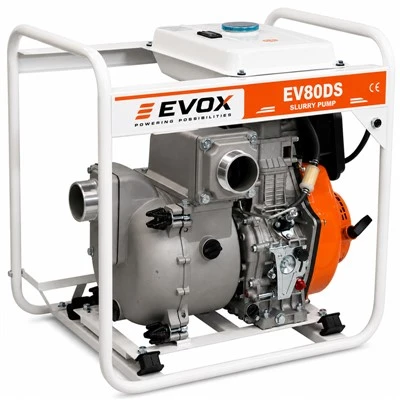
Evoxpower Technology is one of the most professional water pump manufacturers and suppliers in China, featured by quality products and good service. Please rest assured to buy the newest water pump in stock here and get pricelist from our factory. Contact us for customized service and OEM service.
Address: 11 Fortune Avenue, Yubei District, Chongqing, China
E-mail: stephen@allrightpower.com
WebSite: https://www.evoxpower.com/
