How does a dewatering centrifuge work in the pharmaceutical industry?
In the pharmaceutical industry, the quest for precision and efficiency is unending. Every production process, no matter how small, plays a crucial role in ensuring the quality and safety of medications. One such key component in this intricate web of manufacturing is the dewatering centrifuge. As a leading supplier of dewatering centrifuges, I’ve witnessed firsthand the transformative impact these machines can have on pharmaceutical production. In this blog, I’ll take you through the inner workings of a dewatering centrifuge and explain why it’s an indispensable tool in the pharmaceutical industry. Dewatering Centrifuge
The Basics of Centrifugation
Before delving into the specifics of dewatering centrifuges in the pharmaceutical context, it’s essential to understand the fundamental principle of centrifugation. At its core, centrifugation is a process that uses the force generated by rapid rotation to separate substances of different densities. When a container filled with a mixture is spun at high speeds, the denser components are forced to the periphery, while the lighter ones remain closer to the center. This principle is analogous to the way a washing machine spins to remove water from clothes.
In a dewatering centrifuge, this basic concept is applied to separate solids from liquids in a pharmaceutical mixture. The mixture is typically a slurry, which contains solid particles suspended in a liquid medium. The goal is to remove as much of the liquid (water or solvent) as possible, leaving behind a concentrated solid product.
Types of Dewatering Centrifuges Used in the Pharmaceutical Industry
There are several types of dewatering centrifuges available, each designed to meet specific requirements in the pharmaceutical industry. The choice of centrifuge depends on factors such as the nature of the pharmaceutical product, the required level of dewatering, and the production volume.
- Disc Stack Centrifuges: These centrifuges are characterized by a stack of conical discs inside the rotor. The slurry is fed into the center of the rotor, and as it spins, the solid particles settle on the discs and are gradually pushed towards the outer edge. The separated liquid is discharged through a separate outlet. Disc stack centrifuges are known for their high separation efficiency and are commonly used for fine particle separation and high-capacity applications.
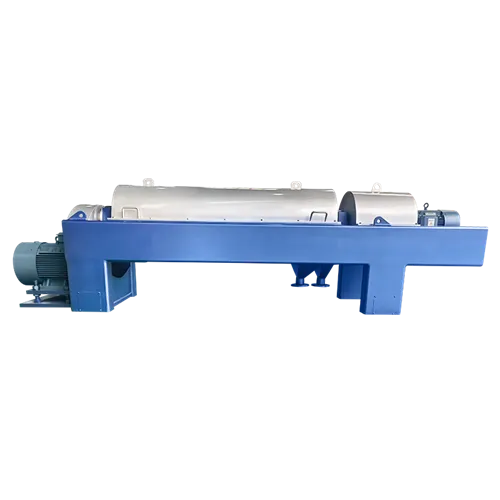
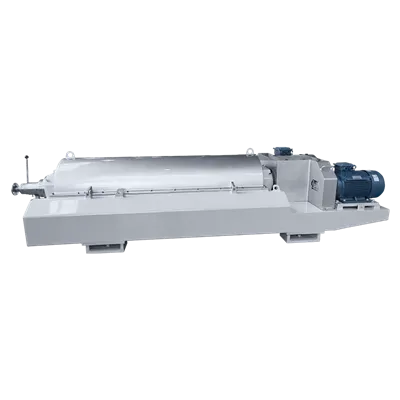
- Scroll Centrifuges (Decanters): Scroll centrifuges consist of a rotating bowl and a scroll conveyor inside it. The slurry enters the bowl, and the rotation causes the solid particles to settle on the bowl wall. The scroll conveyor then moves the solid sediment towards the discharge end, while the separated liquid is removed from the other end. Scroll centrifuges are suitable for slurries with a wide range of solid concentrations and can handle high throughputs.
- Basket Centrifuges: Basket centrifuges have a perforated basket that rotates at high speeds. The slurry is fed into the basket, and the liquid is forced through the perforations by the centrifugal force, leaving the solid particles inside the basket. Basket centrifuges are often used for batch processing and are ideal for applications where a high degree of washing and dewatering is required.
The Working Process of a Dewatering Centrifuge in the Pharmaceutical Industry
Let’s take a step-by-step look at how a dewatering centrifuge operates in a pharmaceutical manufacturing setting.
- Feed Introduction: The process begins with the introduction of the pharmaceutical slurry into the centrifuge. The slurry can be a byproduct of various pharmaceutical processes, such as crystallization, fermentation, or extraction. The feed rate is carefully controlled to ensure optimal performance of the centrifuge.
- Separation of Solids and Liquids: Once inside the centrifuge, the mixture is subjected to high centrifugal forces as the rotor spins. The solid particles, being denser than the liquid, are forced to the outer wall of the centrifuge. Over time, a layer of solid sediment forms, while the clarified liquid remains in the inner part of the centrifuge.
- Dewatering of the Solid Phase: As the solid sediment accumulates, the dewatering process intensifies. The centrifugal force helps to squeeze out the remaining liquid from the solid particles, reducing their moisture content. In some cases, additional washing steps may be incorporated to remove impurities and further improve the quality of the solid product.
- Discharge of Solids and Liquids: Once the dewatering process is complete, the separated solids and liquids are discharged from the centrifuge. The solids are typically removed from the centrifuge in a continuous or batch mode, depending on the type of centrifuge. The clarified liquid, on the other hand, is collected and may be further processed or recycled.
Advantages of Using Dewatering Centrifuges in the Pharmaceutical Industry
The use of dewatering centrifuges offers several significant advantages in pharmaceutical manufacturing.
- Improved Product Quality: By effectively removing excess moisture from the pharmaceutical product, dewatering centrifuges help to improve its purity, stability, and shelf life. This is particularly important for medications that are sensitive to moisture, such as certain antibiotics and vaccines.
- Increased Production Efficiency: Dewatering centrifuges can handle large volumes of slurry in a relatively short period, reducing the overall processing time. This leads to increased production capacity and lower manufacturing costs.
- Reduced Waste Generation: The separation of solids and liquids allows for the recovery of valuable pharmaceutical ingredients from the slurry. Additionally, the dewatered solids are easier to handle and dispose of, reducing the environmental impact of pharmaceutical production.
- Compliance with Regulatory Standards: The pharmaceutical industry is subject to strict regulatory requirements regarding product quality and safety. Dewatering centrifuges can help pharmaceutical manufacturers meet these standards by ensuring consistent and reliable separation of solids and liquids.
Challenges and Considerations
While dewatering centrifuges offer numerous benefits, there are also some challenges and considerations that need to be addressed in the pharmaceutical industry.
- Product Compatibility: The choice of centrifuge material and design must be compatible with the pharmaceutical product to avoid contamination. For example, some pharmaceutical compounds may be reactive with certain metals, requiring the use of corrosion-resistant materials such as stainless steel or plastics.
- Cleaning and Sanitization: To prevent cross-contamination between different batches of pharmaceutical products, the dewatering centrifuge must be thoroughly cleaned and sanitized after each use. This requires the use of appropriate cleaning agents and procedures, as well as regular maintenance of the centrifuge.
- Energy Consumption: High-speed centrifuges consume a significant amount of energy, which can increase the operating costs of pharmaceutical manufacturing. To address this issue, manufacturers are increasingly looking for energy-efficient centrifuge designs and technologies.
Importance of Choosing the Right Supplier
Selecting the right dewatering centrifuge supplier is crucial for the success of pharmaceutical manufacturing operations. A reliable supplier should offer high-quality centrifuges that are designed to meet the specific requirements of the pharmaceutical industry. They should also provide comprehensive after-sales support, including installation, training, maintenance, and repair services.
As a dewatering centrifuge supplier, we understand the unique challenges faced by pharmaceutical manufacturers. That’s why we offer a wide range of centrifuges that are specifically designed for pharmaceutical applications. Our centrifuges are made from high-quality materials, ensuring durability and reliability. We also provide customized solutions to meet the specific needs of our customers, whether it’s a small-scale laboratory application or a large-scale production facility.
Conclusion
In conclusion, dewatering centrifuges play a vital role in the pharmaceutical industry by separating solids from liquids and improving the quality and efficiency of pharmaceutical manufacturing. By understanding the working principles, types, and advantages of dewatering centrifuges, pharmaceutical manufacturers can make informed decisions about the best equipment for their specific needs.
2 Phase Decanter Centrifuge If you’re in the pharmaceutical industry and looking for a reliable dewatering centrifuge solution, I encourage you to get in touch with us. Our team of experts is ready to help you choose the right centrifuge for your application and provide you with the support and service you need to ensure its successful operation. Contact us today to start a conversation about how we can assist you in achieving your pharmaceutical manufacturing goals.
References
- Perry, R. H., & Green, D. W. (Eds.). (1997). Perry’s Chemical Engineers’ Handbook (7th ed.). McGraw-Hill.
- Rhim, J. W. (2016). Handbook of Smart Packaging Materials: Types, Properties, and Applications. John Wiley & Sons.
- Separation Process Principles: Chemical and Biochemical Operations (Third Edition) by J. D. Seader, E. J. Henley, D. K. Roper, Wiley-Interscience; 3rd edition (July 29, 2015)
Lishui Yuanrong Environmental Protection Equipment Co., Ltd.
As one of the most professional dewatering centrifuge manufacturers and suppliers in China, we have world-leading production equipment and strong manufacturing capabilities. Please feel free to buy customized dewatering centrifuge from our factory. Also, quotation is available.
Address: Lot 6-1, Block 15, Wanyang Zongchuang City, Lishui, Zhejiang, China
E-mail: 361184920@qq.com
WebSite: https://www.yrhdc.com/
