Hey there! I’m a supplier of step-down transformers, and today I wanna chat about how frequency affects these nifty devices. Step Down Transformer
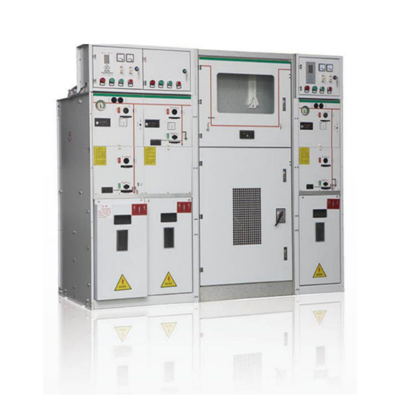
First off, let’s quickly go over what a step-down transformer is. It’s a type of electrical transformer that reduces the voltage from the primary winding to the secondary winding. We use ’em all the time in various applications, like powering small electronics from a higher-voltage power source.
Now, frequency. Frequency is the number of cycles per second in an alternating current (AC) circuit, measured in Hertz (Hz). In most parts of the world, the standard frequency for AC power is either 50 Hz or 60 Hz.
So, how does frequency impact a step-down transformer? Well, one of the key things is the core losses. The core of a transformer is usually made of ferromagnetic materials like iron. When an AC current flows through the primary winding, it creates a changing magnetic field in the core. This changing magnetic field causes two types of losses: hysteresis loss and eddy current loss.
Hysteresis loss occurs because the magnetic domains in the core material have to realign with the changing magnetic field. The higher the frequency, the more often these domains have to realign, which means more hysteresis loss. It’s like trying to turn a steering wheel back and forth really fast. The more you do it, the more energy you use.
Eddy current loss is caused by the induced currents in the core itself. When the magnetic field changes, it induces small currents in the core, and these currents generate heat. Higher frequencies lead to larger eddy currents and thus more eddy current loss. Think of it as water swirling around in a bowl. The faster the water moves (higher frequency), the more energy is dissipated as heat.
These core losses are bad news for a transformer because they reduce its efficiency. Efficiency is the ratio of the output power to the input power. If there are more losses, the output power is lower relative to the input power, and the transformer becomes less efficient. So, as the frequency goes up, the efficiency of a step-down transformer generally goes down, unless it’s specifically designed to handle higher frequencies.
Another important aspect is the impedance of the transformer windings. Impedance is like resistance but for AC circuits. It’s a combination of resistance and reactance. Reactance is related to the inductance and capacitance of the windings.
The inductive reactance of a winding is directly proportional to the frequency. That means as the frequency increases, the inductive reactance also increases. This can have a big impact on the current flowing through the windings. If the inductive reactance is too high, the current will be limited, and the transformer may not be able to deliver the required power.
On the other hand, the capacitive reactance is inversely proportional to the frequency. As the frequency goes up, the capacitive reactance goes down. But in most step-down transformers, the inductive reactance is the dominant factor, so the overall impedance usually increases with frequency.
The voltage ratio of a step-down transformer is also affected by frequency. The voltage ratio is determined by the turns ratio of the primary and secondary windings. In theory, the voltage ratio should remain constant regardless of the frequency. However, in practice, the changing impedance and core losses can cause the actual voltage ratio to deviate from the ideal value.
At higher frequencies, the increased impedance can cause a drop in the output voltage. This is because the current flowing through the windings is reduced, and the voltage across the secondary winding is proportional to the current. So, if you’re using a step-down transformer at a frequency different from its rated frequency, you may not get the exact output voltage you expect.
Now, let’s talk about the design of step-down transformers and how they’re optimized for different frequencies. Transformers designed for lower frequencies, like 50 Hz or 60 Hz, have larger cores and more turns in the windings. This is because the magnetic field changes more slowly at these frequencies, and you need a larger core to accommodate the magnetic flux.
For higher frequencies, say in the kilohertz or megahertz range, transformers are designed differently. They use smaller cores made of materials with lower hysteresis and eddy current losses, like ferrite. The windings are also designed to have lower inductance and capacitance to reduce the impedance at high frequencies.
As a step-down transformer supplier, I’ve seen firsthand how important it is to choose the right transformer for the right frequency. If you use a transformer designed for 50 Hz in a 60 Hz application, it may work, but it could be less efficient and may have a slightly different output voltage. On the other hand, using a high-frequency transformer in a low-frequency application is also a bad idea because it may not be able to handle the magnetic flux properly.
So, if you’re in the market for a step-down transformer, make sure you know the frequency of your power source and the requirements of your load. That way, you can choose a transformer that’s optimized for your specific application.
If you’re interested in learning more about step-down transformers or need help choosing the right one for your project, don’t hesitate to reach out. I’m here to help you make the best decision and get the most out of your transformer. Whether you’re working on a small DIY project or a large industrial application, I’ve got the expertise and the products to meet your needs.

Let’s have a chat and see how we can work together to find the perfect step-down transformer for you. Looking forward to hearing from you!
Transformer References:
- Electrical Engineering textbooks on transformers
- Technical papers on transformer design and performance
Huachi Electric Co., Ltd.
We’re well-known as one of the leading step down transformer manufacturers in China, featured by quality products and good service. Please rest assured to buy customized step down transformer made in China here from our factory. Contact us for more details.
Address: Plastic Park, Tongyu Street, Luqiao District, Taizhou City, Zhejiang Province
E-mail: HCDQ2026@163.com
WebSite: https://www.huachi-electric.com/
